Tag Archives: Coca-Cola

Will Neigh or Won’t Neigh?

Equine Rock Stars

Intrigue is thick on the eve before the Big Game.  Just what exactly does Motorola have up their sleeve?  Will any or all of the Doritos  (consumer-generated) ads make it to a top slot in the USA TODAY Ad Meter rankings, thereby creating a potentially huge windfall for their creators?

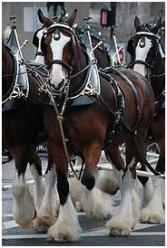
And for goodness sake, will we get to see some Clydesdales this year?

Anheuser-Busch has been toying with our emotions for weeks, first saying “No Clydesdales” and then saying, “ok, MAYBE we’ll let you see them…”

Well at least in terms of the last question, we do have an answer.  As those who have recently visited Budweiser’s Facebook fan page already know, the equine rock stars of the advertising world will appear in a new ad during the Game, and you can even get a sneak preview of it here.

So now that we can at least relax on that front, here are some final tips and guidelines for really “getting into” this year’s Super Bowl advertising.  Half the fun is knowing the inside scoop!  In addition, the last section of this blog post explains how to join the upcoming #SBadwatch2010 TweetChat as well as participate in the post-game 4-SQUARE™ Super Bowl 2010 Ad Survey.

Who’s advertising this year?  Are any of the “usual suspects” gone?  Any notable “newbies”?

Expect to see a lot (in seconds on the screen) from Anheuser-Busch and Coca-Cola.  There may be up to 9 movie trailers combined from Disney, Universal and Paramount.  It will feel like there is a huge amount of automotive advertising, with spots from Hyundai, Kia, Audi, Honda, Volkswagen and Dodge.  (Yes, that’s right.  For the first time since 2005 a Dodge model will be advertised in the Super Bowl. Last time it was the Dodge Magnum; this year it is the Dodge Charger.)

With so many automotive manufacturers showing up for the Super Bowl, it’s notable that Subaru, riding high on their incredible sales performance of 2009, chose the “road less traveled” and opted to advertise on Animal Planet’s Puppy Bowl instead!

(Subaru led the industry in 2009 with a U.S. sales advance of 5%, increasing market share to 2.1% from 1.4% in 2008—all in an overall market that plunged 21%.)

Advertisers who in years past had a big presence in the Super Bowl yet are gone this year include FedEx, Pepsico and General Motors.  There are no major banks advertising; the only financial services firm will be E-Trade.

“Newbies” include Boost Mobile, HomeAway (for vacation rentals), and the already hotly-debated Focus on the Family.  (Last year newbie Cash4Gold received much attention for seeming like a “brand out of water” amidst all the fancy Super Bowl creative seen from more traditional advertisers.  Which newbie ad this year will raise eyebrows?)

What’s new in consumer-generated content this year?

Two major players have chosen to go with ads created by consumers.  Doritos, continuing with their “Crash the Super Bowl” contest, once again invited people to submit self-made Doritos ads.  They will air the three top winning ads during the Game, and if any of these make it to a top-3 slot in the USA TODAY Ad Meter the creator will win major cash.  There is a potential payout, if somehow all three ads place in the Ad Meter poll, of $5 MILLION DOLLARS.  Over 4,000 ads were submitted to the contest this year.

CareerBuilder, while perhaps not in the same league in terms of financial prizes, will feature with great fanfare the winner of their “Hire My TV Ad” contest.  Three finalist ads, all highlighting how CareerBuilder can help rescue someone from a miserable work environment, were posted online for voting and the final winner will be unveiled at the Super Bowl.

Interesting marketing moves to check out before/after/during the Big Game:

1. Callaway Golf will be the stand-alone sponsor of the 5:00 pm—5:30 pm half hour ahead of kickoff, and will have “product exposure” on the CBS set during the time period. Phil Mickelson (their primary endorser) is slated to appear in an additional segment to run during the sponsored programming.

2. Bridgestone is sponsoring the game’s halftime show (and will have spots during the game as well).

3. Intel is title sponsor of the post-game show.  (They’re running one 30 second spot during the game, then two after the game).

4. Sun Life (a Canadian financial services firm) bought the naming rights to the stadium in which the Super Bowl will be played.  They will leverage in-broadcast name mentions with TV spots that will air during the Super Bowl pre-game and post-game shows.  (Note, this stadium has had many names, including Dolphins Stadium, “Land Shark Stadium” (briefly), Pro Player Stadium and Joe Robbie Stadium.)

5. Ford, while missing from the game, has bought spots to run in the pre-game shows.

6. Hyundai plans to run EIGHT COMMERCIALS in total if one counts before, during and after the game.  Plus the brand will sponsor the pre-game kickoff show for the second year in a row. The 2009 Advertising Age Marketer of the Year is determined not to lose any momentum!

7. McDonald’s will show a remake of the famous 1993 Super Bowl commercial “The Showdown.”  The original featured Michael Jordan and Larry Bird competing for a Big Mac.  In the remake LeBron James and Dwight Howard are on the court.  A teaser of this ad can be found here, but the full 60-second spot will air during the pre-game.

How to Join the Super Bowl TweetChat, #SBadwatch2010:

I will be tweeting with others on Twitter in real-time during the game at #SBadwatch2010, and hope you will join us!  For those who may be unfamiliar with TweetChats (including some of my current Marketing 715 students), here are the instructions you will need to participate.

(Note, I recommend doing this earlier, before the game, so that you can get acquainted with the speed and general interface.  Particularly once the game begins things can move really fast and become hard to follow if one is inexperienced.)

1. You should use your Twitter login to log on to http://tweetchat.com/.

2. Enter SBadwatch2010 into the search bar up at the top (i.e., in the box that follows the hashtag).

This will get you into the chat.  Then, Happy Tweeting!  I can’t wait to find out your reactions to what these advertisers have in store for us.

Finally, instructions for the 4-SQUARE™ Super Bowl 2010 Ad Survey (to be found at thinkfeelsaydo.com):

Once the game is over we will need to ask: So how did all of this add up? From a marketing perspective, who were the winners? Losers?

To answer that question, it’s important to ask a more fundamental question: what makes a good Super Bowl ad? Or for that matter, what makes a Super Bowl ad tank? Consider a 4-SQUARE™ assessment. Four conditions that set the stage for success or failure are:

1. Exposure –Were the right people exposed to the ad?

When did it appear? What quarter? Were people actually in the room and able to look at the ad? Or were they zapping to Puppy Bowl, or fighting with the Colts fans in the room, or (really) drunk, or otherwise not available?

2. Attention –Did the right people pay attention to the ad?

Did the ad command and hold attention? Did it break through, and maintain its hold on the viewer, all the way to the end?

3. Comprehension –Did the right people “get” the ad?

Did viewers understand the story or gist of the ad, and take away the key point the marketer was hoping to convey? The point could be anything, from “we’re the best product” to “we’re all-American” to “we’re cool” to “you need to go to our website right now!” But the ad should make the consumer think, feel, say or do something as intended by the marketer. If the ad didn’t make something happen in the consumer, it’s dead-on-arrival.

4. Integration –Did the ad ladder up to, or connect well with, other marketing tactics?

Did the ad connect the consumer with other social media, other consumers, other marketing tactics? In other words, was the ad just one (perhaps major) link in a chain, connecting the consumer with other marketing activities such as going to Facebook, going to the marketer’s website, entering a sweepstakes, redeeming a voucher for a free gift, or just talking to other consumers about the ad (online and/or in person)?

Come back to this website, thinkfeelsaydo.com, shortly after the game (or Monday morning if you prefer your own version of “Monday-Morning Quarterbacking”).  My handy-dandy 4-SQUARE™ Super Bowl 2010 Ad Survey will be live and waiting for you, where you can rate the ads shown during the 2010 Super Bowl on the FOUR KEY SUCCESS CRITERIA listed above.

For those who don’t get a chance to see the ads during the actual Super Bowl, all ads that air can be found at CBS Sports beginning immediately after the completion of the game.

I’ll post the 4-SQUARE™ survey results in this blog soon after, as well as provide more analysis and identify the ads I believe should win 2010 “Best in Show”/“Worst in Show” awards.

And now:  Countdown to SUPER BOWL XLIV on television, and #SBadwatch2010 on Twitter!

5 Comments

Filed under advertising, Budweiser, Doritos, marketing, super bowl ads, super bowl advertisements

And the Academy Award goes to… Tim Gunn?

Did you watch the Oscars? As we wait for the overnight numbers, keep in mind that increasingly viewers are opting out when it comes to this annual telecast. Last year’s show garnered the lowest viewership on record (32 million, down from 39.9 million in 2007). In general, the awards show hasn’t seen a big crowd in this decade since the year 2000, when American Beauty won best picture (see Nielsen for a list of the ten most-watched Oscar shows in the years 1974—2008).

So, why should marketers care at all about the Oscars? Industry types know that Oscar buzz translates into greater box office for a picture, in part because of a self-fulfilling prophecy. Once nominated, a film is typically given much broader distribution, which in turn leads to more take at the box office…an increase in the range of 18%–72% for this year’s nominated films.

For other marketers, though, the Oscars award show represents one of the few remaining marquee opportunities to reach a relatively broad swath of viewers, all interested in watching a live event. Even with viewership at a record-low level in 2008, 18.7% of American homes tuned in—just a tick under the same amount who tuned in for the opening ceremonies of the 2008 Olympic Games. Particularly in years when there is no Olympics, and particularly for those who can’t or won’t pay Super Bowl-level prices for 30-second spots, the Oscars telecast remains a valuable option for placing broad-appeal ads. Plus, beyond reach the Oscars offers advertisers a desirable image for association—it is still perceived as an upscale venue and premium event in the minds of its audience.

This year’s show tried to mix things up, with a new host (Hugh Jackman), new presentation gimmicks (e.g., having five of the former winners in a category up on stage, each saying a word of admiration to a nominee), and a new earnestness (with a nod to the down economy, in skits that attempted to suggest Oscar had grown cost-conscious). The results were mixed at best. At least online during the show, many of those posting in #oscaradwatch were not impressed. In general, the show seemed slow this year, with many uninspired attempts at humor.

Marketers had various objectives for their advertising during this year’s telecast. For example, Hoover is launching a new “Platinum Collection” vacuum line; Coke is seeking to shore up and reinvigorate Diet Coke; Hyundai is involved in an epic battle for the pole position on American automotive buyers’ shopping list. Frito-Lay, with its “True North” campaign for True North line of nuts, seeks to create associations in consumers’ minds very different from those created by the recent Dorito’s ads. As with the Super Bowl, marketers had many reasons to pony up big bucks for spots on the telecast. But given those objectives, how did they fare?

To achieve maximum results, we know that four conditions are necessary: exposure, attention, comprehension, integration. While there didn’t seem to be as much emphasis on integration as we saw during the Super Bowl, ads still varied in terms of their performance on the other three criteria.

Notable advertisers this year, at least in terms of exposure, were Hyundai and JCPenney. But size (share of voice) isn’t everything—winners in terms of attention and uniqueness were Coke and Tide. The latter stole the show with an inspired spot featuring Tim Gunn, designed to launch Tide Total Care with a broader audience. Given that Gunn had been very apparent in interviews during the red carpet phase of the show, in addition to the night’s obvious tie-in to clothing, the spot really popped. (While the spot isn’t available yet online, Gunn has created several videos to promote Tide Total Care—you can check them out here). As an aside, the evening offered—in an ironic twist—a parade of Bravo TV personalities, on stage and in ads, including Heidi Klum and Tom Collichio in addition to Tim Gunn. Weird to see so many on an ABC telecast!

If Tide scored with a very-memorable spot, Hyundai and JCPenney scored with sheer share of voice. Between the two, JCPenney had the more remarkable creative strategy, with ads that were fresh, attention-grabbing and consistent with the hip image JCPenney is chasing. Target, watch out—as one poster on Twitter mentioned during #oscaradwatch, this was definitely a shot over the bow at the Minneapolis-based rival!

In addition, a special mention goes to Coke. Their Oscars spot featuring the iconic Coca-Cola bottle was very consistent with the “Open Happiness” spots that debuted during the Super Bowl. This campaign appears to be very integrated and on-brand. Nice to see, in the face of the seemingly-schizophrenic creative strategy adopted by Hyundai.

Speaking of Hyundai, there seems to be a debate in the community regarding their marketing strategy. Some admire the company for constantly reminding consumers of their Assurance program (an admittedly-fine feature for skittish automotive shoppers in these trying times). But others feel the brand STILL has no clear brand identity, even with massive expenditures on Super Bowl and Oscars advertising (as well as their regular media appearances). What do you think?

OK, time to take down the balloons and clean up the empty champagne bottles till next year. Meanwhile, more on Hyundai and brand strategy soon!

View an archive of #oscaradwatch

Leave a comment

Filed under marketing

Best (and worst) in Show

Best Performance by a Brand
Emotional advertising that nailed it!

Worst Performance by a Brand
Make sure you’re dressed for the dance!

Check out more of my playlists at the Think, Feel, Say, Do YouTube page

Leave a comment

Filed under advertising, marketing, super bowl ads

Girls and Horses: Super Bowl 2009

Another year, another Super Bowl. Dreams of greatness, realized for some and dashed for others. (Greatness on the football field? NO—we’re talking greatness in terms of connecting with consumers, and making something happen marketing-wise!)

This year we saw girls, girls, girls. The Cheetos “Snooty Girl,” the Doritos “undressed girl”—undressed to the sounds of opera!—the girl getting sarcastic flowers from Teleflora, plus among others, the incredible Danica Patrick in one of the always-provocative GoDaddy spots. We also saw the (over)use of animals, always a major theme in Super Bowl advertising. While we didn’t see as many chimps as in previous years, there was an unprecedented number of Clydesdale horses crossing our screens, and we even saw Martha Stewart posing with a black stallion (in an NBC spot). Beyond the Girls and Horses, there were avatars, bugs, E*Trade babies, lizards, the Angel of Death and Bob Dylan. When even Alec Baldwin shows up, there’s truly something for everyone.

So how did all of this add up? From a marketing perspective, who were the winners? Losers?

To answer that question, we need to consider a more fundamental question: what makes a good Super Bowl ad? Or for that matter, what makes a Super Bowl ad tank? Four conditions that set the stage for success or failure are:

1. Exposure – when did it appear? What quarter? Were people in the room and able to look at the ad? Or were they zapping to Puppy Bowl, or fighting with the Cardinals fans in the room, or otherwise not available?

2. Attention – did the ad command and hold attention? Did it break through, and maintain its hold on the viewer, all the way to the end?

3. Comprehension – did viewers understand the story or gist of the ad, and take away the key point the marketer was hoping to convey? The point could be anything, from “we’re the best product” to “we’re all-American” to “we’re cool” to “you need to go to our website right now!” But the ad should make the consumer think, feel, say or do something as intended by the marketer. If the ad didn’t make something happen in the consumer, it’s dead-on-arrival.

4. Connection – did the ad connect the consumer with other social media, other consumers, other marketing tactics? In other words, was the ad just one thread connecting the consumer with other marketing activities, whether it be going to Facebook, going to the marketer’s website, entering a sweepstakes, redeeming a voucher for a free gift, or just talking to other consumers about the ad (online and/or in person)? (By some accounts only roughly a third of this year’s ads were designed to integrate with social media. A lost opportunity for those other 2/3’s!)

OK, what do you think? Check out my handy-dandy survey, where you can rate all the ads shown during the 2009 Super Bowl on the four key success criteria.

Deb’s Notes

Here are some things I noticed while viewing this year’s Super Bowl advertising.

1. Exposure and one-second ads—what’s that all about?

Miller enjoyed huge buzz ahead of the Super Bowl regarding their “revolutionary” one-second spots. In fact, a huge number of people missed (i.e., were not exposed to) the spots during the game. (Think about it…particularly if you’re in a bar or at a big party, it’s easy to miss much bigger things going on during the Super Bowl than a one-second TV spot). Nonetheless, Miller gained exposure in the places that really mattered…online, and in the press before and after the big game. A winner!

2. The mood of the country and major disconnects.

GoDaddy is well-known for its use of sexual imagery in Super Bowl communications. For the third year they stirred the pot…using basically the exact same creative strategy as in previous years (with the notable exception of inviting Danica Patrick to participate). Nothing really new in their approach, and yet they generated MUCH more negative reaction this year as compared to previous years. In this somber time, it seems many fewer have tolerance for the GoDaddy skin game.

H&R Block’s use of the Angel of Death was too over the top. When people are losing jobs and having nightmares about financial ruin, it’s much safer to talk about taxes as a pain in the you-know-where, rather than evoke death and disaster.

Doritos. When unemployment is one of the top three worries facing Americans, does it make sense to show a twit throwing a crystal ball at his boss’s crotch? Sure, people may be unhappy in their current situation, but uncertainty or worry is more resonant than anger at this point. This was also one of the biggest disconnects with women…it was very much a “guy” kind of spot, many women thought it was plain stupid. Sure, the ad won the USAToday overnight poll…but how much of that is due to rooting for the (non-agency) underdog?

3. Lost opportunity: Hyundai’s big move, wasn’t. But there’s still hope.

With the “Big 3” automakers ceding the Super Bowl stage to others this year, a real opportunity opened up for an imaginative competitor to steal some thunder. Hyundai had three different spots, staking a major claim. Yet all three were very different in creative strategy, look and feel. In addition to a lack of integration, the “Angry Bosses” ad was strident and likely seemed racist, at least to a significant number of viewers. Yet, as Jonah Bloom noted, if their objective was simply to raise brand name awareness and inform about their Assurance program, the spend on the Super Bowl may prove worthwhile.

Meanwhile: is it possible to create a brand image AND move metal in a car ad? Cadillac has been doing it for years. Immediately after the 2009 Super Bowl game ended, they ran their 2008 CTS spot…a real winner that featured Kate Walsh.

4. Girls like horses (and other things that boys aren’t as crazy about).

We saw some major gender differences in how men and women reacted to this year’s ads. Two advertisers already mentioned, GoDaddy and Doritos, were particularly panned by women. Meanwhile, women definitely liked the Anheuser-Busch Clydesdales more than did men, and also seemed to react to the Teleflora ad much less negatively than did men. This raises an interesting question: when you’re going for the biggest mass audience possible, how much should you care about gender differences? Is it ok to score much higher with one group than another?

5. When you come to the big dance, be ready.

Vizio wins the award this year for most epic FAIL in Super Bowl advertising. Spend $3mil to tell people “go to our website!”…and then when they do, they discover that the website is down.

Almost as bad as when General Motors scored big with their placement of the G6 on the Oprah Winfrey Show (the famous car giveaway stunt), only to suffer an epic FAIL when interested shoppers who had seen the G6 on Oprah went to dealers to take a look. There were no G6s on the lots…they hadn’t shipped yet.

6. Clydesdales: from noble brand-builders to clowns.

Last year’s Anheuser-Busch ad, featuring Hank the Clydesdale in an homage to the film Rocky, was widely recognized as the top ad shown during the 2008 Super Bowl. Historically, the Clydesdales have been used sparingly and very effectively, generating deep emotion, appealing to our higher sense of Americana, pride and heritage while reinforcing the Budweiser brand. Unfortunately, the marketer used the 2009 Super Bowl to turn these equine brand icons into a latter day version of Budweiser Frogs…clowns meant to provide laughs and lots of opportunity for imitation. Not only were the spots a letdown, they pushed a key brand identity element dangerously close to losing its primary meaning. A big miss!

In summary, key takeaways from Super Bowl 2009: (a) gender matters, (b) it’s important to treat the brand icon with the respect it has earned, and most important, (c) getting it right on all four Super Bowl success criteria is a challenge!

1 Comment

Filed under advertising, marketing, super bowl ads